No. In Subway Surfers, he is the main chaser antagonist, but the game does not portray him as an evil character.
The policeman triggers the main chase by trying to stop you after you get caught, which keeps the endless run exciting.
When you crash he catches you, and when you play well you stay ahead and score higher.
Stickman Hook is a great pick for Subway Surfers fans because both games reward calm timing, quick reactions, and smooth control.
No, not in the traditional sense. In Subway Surfers, the policeman (often described as the inspector) is the character chasing you, so he works as the game’s main antagonist.
However, an antagonist is simply someone who opposes the main character, while a villain usually implies malicious intent, cruelty, or an “evil” goal. Subway Surfers keeps its tone light and cartoonish, so the chase is designed to create fun pressure rather than tell a serious story about good versus evil.
The policeman exists to trigger the core gameplay loop. You start running because you were caught doing something you should not be doing around trains, and the inspector’s job is to stop you.
That makes him the engine that powers the endless runner experience.
When you crash, he catches up and your run ends. When you play well, you keep distance and push for a higher score.
This structure is why he feels like “the bad guy” during the run, even though the game does not treat him as an evil character.
If you want a clean way to describe the policeman, this is it.
He is an antagonist because he creates conflict and chases the player.
He is not a villain because the game does not give him an evil motivation or harmful storyline.
That is the difference many players are looking for when they search the keyword.
Inside the game’s world, the runner is trespassing and causing trouble near active tracks. The policeman is a rule enforcer who tries to stop unsafe behavior.
Subway Surfers is not trying to make a moral statement, but the basic logic is simple: you are the mischievous character, and he is the consequence.
From a game design perspective, the chase also creates urgency. Without a pursuer, there is less tension, fewer “close call” moments, and less reason to replay for better runs.
Even a neutral character can feel like a villain in gameplay. The policeman represents failure. When you see him close in, it usually means you made a mistake, slowed down, or hit an obstacle.
He interrupts your momentum and ends your run, so your brain naturally labels him as “the enemy.”
That emotional reaction is normal in endless runner games. The character who ends your best streak will always feel like the villain, even if the story does not say he is.
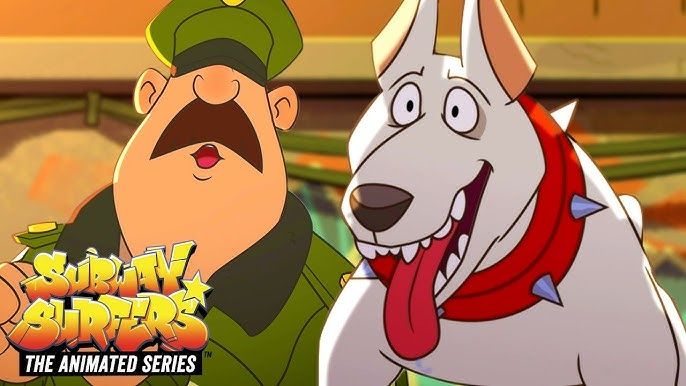
The policeman’s dog helps keep the chase playful. Instead of being frightening, the pair feels like a cartoon pursuit that adds energy and humor.
Subway Surfers relies on bright visuals, quick movement, and a lighthearted vibe, so the chase is more slapstick than threatening.
If you like Subway Surfers, you probably enjoy games that reward timing, rhythm, and fast reactions. That is why Stickman Hook is a great next pick.
Subway Surfers challenges your lane switching and obstacle timing, while Stickman Hook challenges your swing timing and release angles. The skill overlap is real: both games punish panic and reward calm, consistent control.
Many players refer to him as the inspector, since he behaves like a strict ticket inspector or guard.
Because the player is causing trouble near trains, and the chase creates the core tension that makes Subway Surfers fun to replay.
Not really. The dog is part of the chase dynamic and reinforces the game’s playful, cartoon tone.
No. It is an arcade endless runner, and the chase exists mainly to support fast, repeatable gameplay.
So, Is Subway Surfers policeman a villain? He functions as the game’s antagonist because he chases you, but he is not written as a true villain with malicious intent.
If you want another quick, skill based game that rewards timing and smooth flow, try Stickman Hook next and see how satisfying perfect swings can be.